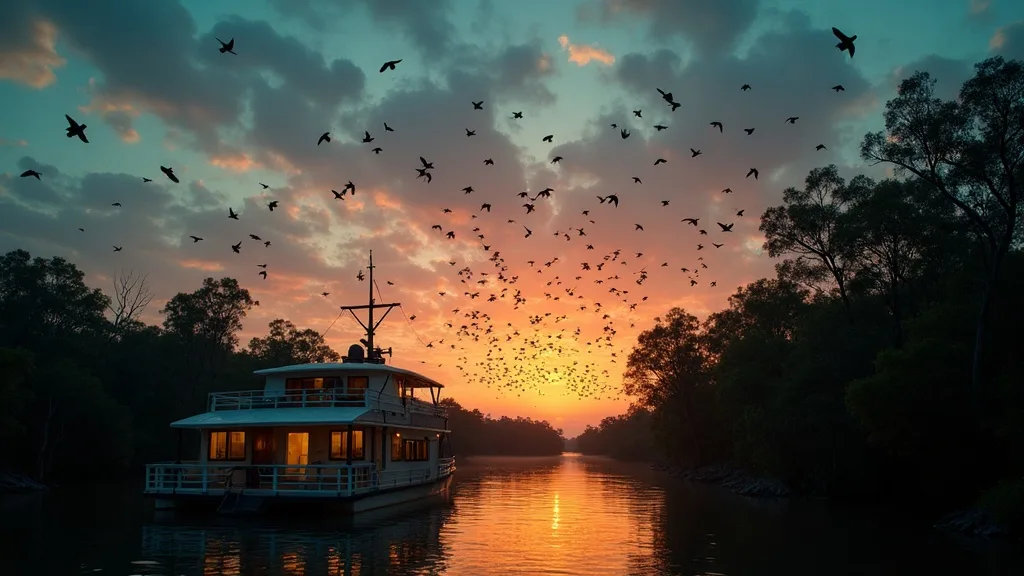
Kalong Island is a mangrove islet near Rinca where tens of thousands of flying foxes — kalong in Indonesian — pour out of the trees at dusk and stream across the sunset sky for half an hour. Liveaboards anchor in the channel for the show, and because the islet sits on the natural day-1 track from Labuan Bajo, most captains make it the first night’s anchorage: dinner on deck, bats overhead.
Why boats moor here on night one
The logic is pure routing. After the opening stops near Labuan Bajo, a boat bound for the southern park needs to end day 1 within reach of Rinca or Padar for the next morning. The Kalong channel does exactly that, and it adds the single most reliable wildlife spectacle of the whole route at zero detour. The colony flies every evening of the year — it does not depend on season, tide or luck the way manta sightings do. Our deck logs across hundreds of departures record the fly-out happening nightly without exception; what varies is only the light, the cloud, and how long the stream lasts.
Fly-out times by month — fleet deck-log ranges
| Months | Typical sunset (WITA) | First big wave of bats | Viewing notes |
|---|---|---|---|
| April – June | 17:50–18:00 | 18:00–18:20 | Dry-season clarity, clean orange horizons |
| July – September | 17:50–18:00 | 18:00–18:20 | Clearest skies of the year; peak silhouette photos |
| October – December | 18:00–18:20 | 18:10–18:40 | Building clouds can turn the sky dramatic red |
| January – March | 18:10–18:35 | 18:20–18:50 | Squalls possible; colony still flies between showers |
Captains position the boat 30–45 minutes before sunset so guests are settled with cameras ready when the first scouts lift off. The stream builds gradually — the peak usually comes 10–20 minutes after the first wave, then tails off as the colony disperses toward feeding grounds on Flores. Galley timing follows the sky: most of our crews serve dinner either just before the fly-out so guests watch with plates in hand, or hold the meal until the show ends — tell your cruise leader which you prefer on the first afternoon and the schedule bends to it.
Anchorage position and the best deck to watch from
Boats anchor in the sheltered channel off the mangrove fringe, holding over sand and mud in calm water — one reason this is such a comfortable first night for guests still finding their sea legs. The bats exit the mangroves heading broadly toward Flores, which means the stream crosses the sky rather than staying over the island. Practical consequence: the best position is usually the top or bow deck with a clear view west-to-northwest, where the birds-in-silhouette shot lines up against the afterglow. Ask the crew which side to set up on when you anchor — they will know the evening’s wind set and how the boat will lie. This anchorage also features in our wider tour of Komodo’s best sunset anchorages.
Watching well: distance and wildlife etiquette
The spectacle works because the colony is undisturbed. Boats keep respectful distance from the mangrove fringe, engines and generators run at anchor rhythm, and nobody lands on the islet — Kalong is a roost, not a beach stop. Spotlights aimed at the trees are the one real sin here; the fly-out happens in natural light and needs none. Drones deserve their own mention: flying one into a stream of thousands of bats is dangerous for the animals and the aircraft alike, and park-area drone use is regulated. Current permit steps and fees are detailed in our Komodo drone rules guide. Standard long lenses and phones capture the scene perfectly well from deck.
From the wheelhouse
“Guests think the first night will be the quiet one. Then the sky starts moving. I have watched the fly-out for nine seasons and I still come out of the wheelhouse for it.” — captain, Komodo Luxury fleet
Where Kalong sits in the route
A typical day 1 runs marina → Kelor Island for the hill-and-swim opener → Rinca side waters → Kalong channel by late afternoon. The next morning the boat is already positioned for Padar’s sunrise ridge or the ranger-led dragon trekking — the dragon sites themselves are covered comprehensively by Komodo Luxury’s destination guides. Kalong asks nothing of your legs after a first day of climbing and swimming: the show comes to you, at dinner, on schedule. On shorter charters where the first night must push deeper into the park, some captains substitute a different sheltered bay and pick up the fly-out on the return leg instead — if the bats matter to you, say so at booking and the route will be built to keep them in.
Photographing the fly-out from a moving-nothing deck
The Kalong shot is easier than most wildlife photography because the platform does not move and the subject comes on schedule — but a little preparation separates a keeper from a smudge. Phones: switch off the flash, tap-to-expose on the bright sky rather than the dark mangroves, and shoot bursts as the waves cross the afterglow; silhouettes want the sky correctly exposed and the bats black. Cameras: a 70–200 mm frames individual wingspans against colour, while 24–70 mm captures the river of animals over the boat’s rigging for scale. Keep shutter speed at 1/500 s or faster early in the show, then let it drop for deliberate motion blur as the light fades. The elegant trick our cruise leaders suggest: stop shooting at the peak. The middle ten minutes of the fly-out are the densest, and guests who watch them with their own eyes — dinner plate in hand, sky in motion from horizon to horizon — consistently call it the moment the cruise became real. The photographs from the first and last waves will still be there.
Frequently Asked Questions
What time do the flying foxes leave Kalong Island?
The first big wave lifts off within about 5–20 minutes after sunset — roughly 18:00–18:20 in the dry season and as late as 18:50 in January–March. The stream builds to a peak over 10–20 minutes and lasts 20–40 minutes in total.
Do the bats fly every night?
Yes. The fly-out is a nightly feeding commute to Flores, not a seasonal event. Across hundreds of fleet departures our logs record it every evening; only the light and cloud conditions change the quality of the spectacle.
Can you land on Kalong Island?
No — it is a mangrove roost, not a beach stop. Boats watch from anchor in the channel at a respectful distance. Keeping off the islet and leaving spotlights off is what keeps the colony, and the show, intact.
Is Kalong Island worth it compared to the big park stops?
It is a different kind of highlight: guaranteed, effortless and atmospheric. Padar and the dragons demand hikes and timing; Kalong happens overhead while you eat dinner at anchor. Most guests rank the first-night fly-out among their trip’s top three moments.
How close does the boat get to the bats?
Boats hold in the channel off the mangrove fringe; the stream typically passes directly over or beside the deck at height, heading toward Flores. A phone captures the scene, and a 70–200 mm lens gets frame-filling silhouettes.
Can I fly a drone at Kalong Island?
Treat it as off-limits during the fly-out: thousands of animals in the air and regulated park-area airspace make it both risky and restricted. Ask the crew about the current rules before flying anywhere on the route.
This guide is published by Komodo Liveaboard Cruises, operated under Komodo Luxury (PT Komodo Bahari Nusantara), part of Juara Holding Group — company facts.