
Lead Dive Instructor (PADI MSDT)
Owen Prescott’s connection to Komodo started not as an instructor but as a student. In 2007, a twenty-something Australian rolled off a boat at Batu Bolong on his first-ever guided dive as a PADI Open Water candidate and immediately understood that the reef below him was unlike anything else in the region. The current was running, the fish life was extraordinary in density and variety, and the whole site felt genuinely wild. He finished his Open Water certification that week, extended his visa, and has been based in and around Labuan Bajo ever since. Seventeen years later he still remembers the exact direction that first current was pushing.
Expertise and Experience
Owen earned his PADI MSDT — Master Scuba Diver Trainer — certification in 2012 after five years of progressive training in Komodo’s variable conditions. The MSDT rating sits at the top of PADI’s instructor pathway: it covers both the technical instruction of new divers and the assessment of dive professionals, a dual qualification that shapes how Owen reads every guest who steps onto the dive deck. Over more than 4,000 guided dives logged across Batu Bolong, Castle Rock, and Manta Point, he has built a granular working knowledge of each site — not as fixed geography but as dynamic systems where current direction, tidal stage, and visibility shift the experience from one dive to the next. He has witnessed oceanic manta rays at Komodo’s cleaning stations on hundreds of occasions, which means he knows precisely where to position a group so the mantas circle in close rather than pass wide.
What He Manages for Guests
Owen designed and still runs the onboard diver orientation programme for every Komodo Liveaboard Cruises departure. It is not a generic briefing. Before any group descends, he meets individually with each guest to calibrate the day’s plan against their actual logged experience, buoyancy control, and comfort with current — not what their certification card says they can do in theory. He checks equipment configuration, adjusts weighting where needed, and sets explicit expectations for the conditions specific to that site and that morning. This individual pre-dive assessment is the difference between guests who come up buzzing and guests who come up rattled. After 4,000 dives in these waters, Owen also knows when to hold a group on the surface and wait for conditions to settle — a judgment call that experience teaches and no briefing sheet replaces.
A Personal Connection to Komodo
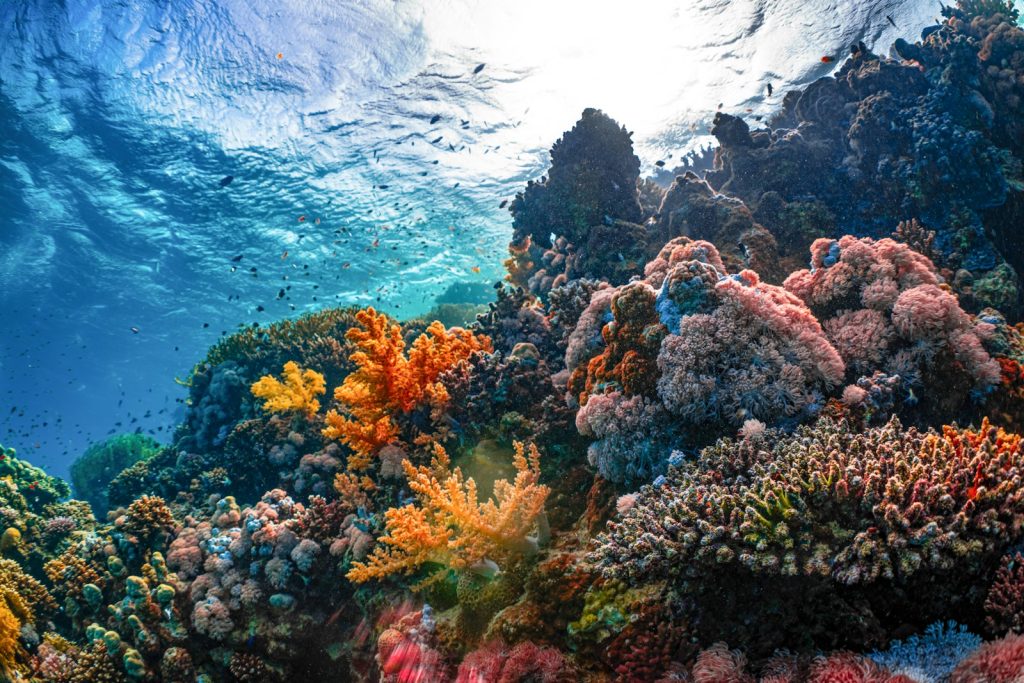
Owen is Australian, but Komodo National Park is where he has spent most of his adult working life, and he is frank about the reason: nowhere else he has dived — and he has put time in at Tubbataha, Raja Ampat, and along the Banda Arc — matches the structural complexity of the reefs here. Batu Bolong, a single seamount no wider than a football pitch, holds coral growth at depths from two metres to thirty, packed with pygmy seahorses, trevally schools, and Napoleon wrasse in a density that still makes him stop mid-descent. Manta Point, on a good incoming tide, can stack fifteen or twenty mantas in the water column at once. These are not spectacular diving destinations in a promotional sense; they are genuinely exceptional reefs by any scientific measure, and Owen has watched them closely enough to notice when something changes — bleaching patterns, shift in manta frequency, new species showing up on the north sites. That long-term attention is what gives his guest briefings specific weight.
Plan Your Dive Trip
If you are planning a liveaboard cruise centred on diving — whether you are completing your first Open Water dives in open sea or logging advanced drifts at Castle Rock — Owen and the team can match you to the right itinerary, vessel, and season. Reach us directly on WhatsApp at wa.me/628113823875 and we will have a personalised recommendation ready within a few hours.