Last reviewed July 2026 by the Komodo Liveaboard Cruises team; pricing and availability verified for the 2027 season.
Plan your Komodo manta ray season 2027 trip around the peak window, December to March. That stretch puts dozens of mantas in the water at once, and you can meet them on a single breath-hold or a tank dive. January and February deliver the densest sightings, when plankton blooms pull resident and visiting rays into the same shallow reefs.
Where to Find Mantas in Komodo National Park
Komodo National Park holds two reliable manta sites: Manta Point and Manta Alley. You meet the rays differently at each. One sits in the central channel and draws crowds; the other hides in the south and stays quiet.
Manta Point (Karang Makassar) — The Central Stage
Manta Point, which locals call Karang Makassar, lies in the channel between Komodo and Rinca islands. The site is a long, shallow reef plateau running 5 to 18 meters deep, so divers and snorkelers both work it. Most operators run it as a drift dive: moderate to strong tidal currents carry you along the reef while the guide times your entry to the rising tide.
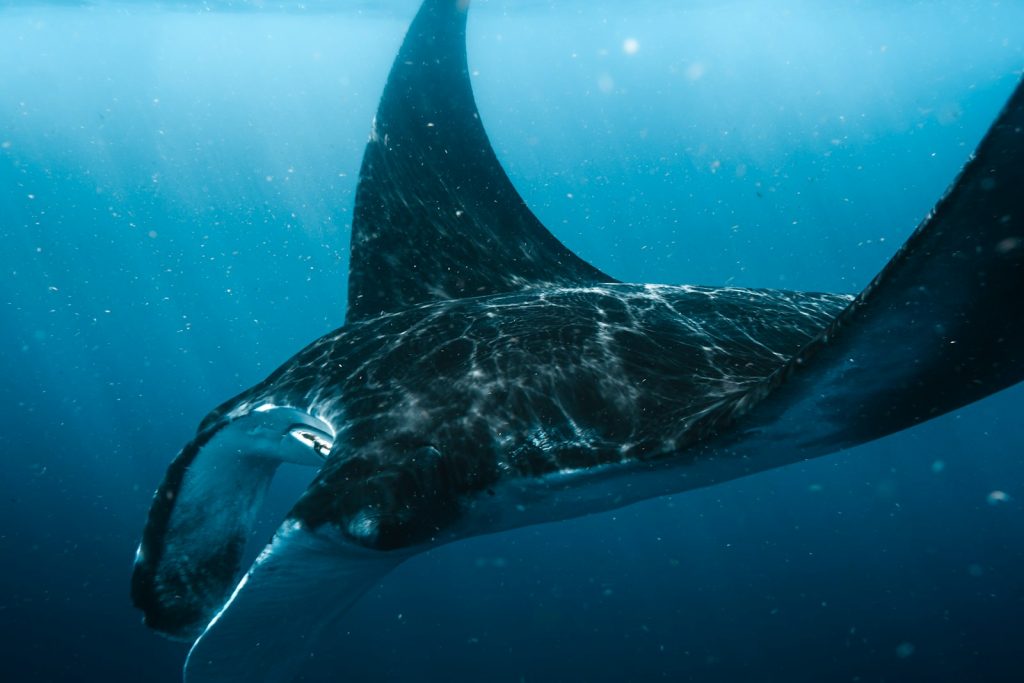
Visibility runs 15 to 30 meters, and it peaks in January and February. Reef manta rays (Mobula alfredi) glide through with wingspans up to 5 meters. Now and then a larger oceanic manta crosses the plateau, stretching 7 meters tip to tip. The rays come here to feed and to get cleaned at reef stations, where cleaner wrasse pick parasites off their skin. When plankton blooms during peak season, the nutrient-rich water pulls in dozens of mantas at once. On the reef top, where the depth holds at 5 to 10 meters, snorkelers watch them feed a few meters below the surface.
Manta Alley — The Southern Secret
Manta Alley sits south of Rinca Island, farther out and far quieter than Manta Point. Visit it between November and April, when southern currents push plankton into the bay and the rays gather to feed. Fewer boats reach this corner of the park, so you often share the water with one manta instead of a dozen divers. You still get the drift, plus a different underwater terrain and a stretch of southern Komodo that day trips skip.
When Is Manta Season in Komodo? Month-by-Month 2027 Guide
Pick your month and you pick your trade-off. Some windows pack the most rays; others trade volume for calm seas and clear water. Here is how 2027 breaks down.
Peak Season: December 2026 – March 2027
Peak manta season runs December through March, and January and February top it. Plankton blooms feed the channel, so the resident rays stay put and non-resident mantas swim in from the surrounding sea. On a good day you count dozens on one dive or one snorkel. Visibility usually reaches 30 meters, though the heaviest blooms can cloud the water a little. The number of rays more than makes up for the haze.
Shoulder Season: April and September–October 2027
April and the September-to-October window balance ray numbers against sea conditions. The mantas drift back to the central reefs around Karang Makassar as they follow their seasonal routes. April pairs the tail of the high-density period with calmer weather and flatter seas. September and October catch the rays returning early, set against clear water and mild days. Both windows suit travelers who want strong sightings without the peak-month crowds.
Dry Season: May–August 2027
Resident mantas stay in the park from May through August, just in smaller numbers than at peak. The sea turns calm, which makes for easy snorkeling and relaxed dives. In May and June, some rays migrate south, so you may run Manta Alley instead of Manta Point. You see fewer mantas, but you also share the reefs with fewer boats, and the quiet pace lets you spend longer exploring the park’s other dive sites.
Diving vs Snorkeling with Mantas: What to Expect at Each
Divers and snorkelers both get a strong manta encounter at Komodo, from different angles. On a dive at Manta Point you drop to 12 to 18 meters and settle near a cleaning station, then watch the rays circle overhead while cleaner fish work their skin. You need an Open Water certification, and the guide handles the moderate to strong current by timing your entry to a rising tide.
Snorkeling pays off too. The mantas feed and get cleaned at 5 to 10 meters, so you watch the same rays from a meter or two below the surface. The shallow depth and gentle drift let you stay with them without a tank or any dive training. A guide stays in the water with you to keep the group safe and read the current, which makes snorkeling the better fit for non-divers and families.
Manta Etiquette and Park Rules You Need to Know
Follow the manta rules and you protect both the rays and the right to keep diving here. Stay at least 3 meters from any manta, never touch or chase one, and switch off your flash. Skip the BCD inflation near a ray, since the bubbles spook it. These rules are why the rays keep returning to these reefs year after year.
Budget for the park fees too. Foreign visitors paid roughly IDR 275,000 to 325,000 per person per day across 2024 and 2025, covering entry, conservation, the harbor charge, and a diver surcharge. A ranger fee for island treks runs IDR 200,000 per group of up to five people. Your operator usually folds these into the trip price, but confirm before you board so the totals match.
Why a Liveaboard Is the Best Way to Experience Manta Season
A liveaboard puts you on the reef when the rays show up, not when the day-trip schedule allows. The Bajo people, the sea nomads who have read these tides and reefs for generations, lived this way long before the dive boats arrived. Sleep on board and you fish Manta Point at first light and again in the afternoon, while a day trip gets one shot at midday. Two windows a day stacks the odds in your favor across a week.
Komodo Luxury runs a curated fleet for the season, including Prana by Atzaro, Lamima, and Natural Cruises. Each boat keeps the cabin count low and the comfort high, so you wake up rested and ready for the early dive. You also reach the southern sites like Manta Alley that day boats cannot, which widens the trip beyond mantas to reef sharks, turtles, and the park’s coral walls.
Choose the liveaboard over the day trip and you get the rays plus the rest of this UNESCO World Heritage Site: the dragons on Rinca, the pink sand on Padar’s beaches, and the ridgeline sunrise hikes. One booking covers the whole map.
Planning Your 2027 Manta Ray Trip with Komodo Luxury
Lock your 2027 manta trip early, since the best boats and the peak-month cabins sell out first. Tell us your travel dates and how many divers and snorkelers are in your group, and our team matches you to the right boat and route. Message us on WhatsApp at wa.me/628113823875 or email [email protected], and we will send back a boat and itinerary built around your dates.
We have hosted more than 10,000 guests since 2015. That track record shapes every itinerary we build, from the order we run the dive sites to the meals we serve between sessions, so your week in Komodo National Park reads the way you want it to.
Frequently Asked Questions About Komodo Manta Ray Season
- When is the komodo manta ray season 2027?
- The Komodo manta ray season for 2027 runs from December 2026 to March 2027, with January and February offering the highest concentration of manta rays due to the peak plankton blooms.
- Can you see manta rays in Komodo on a snorkeling-only trip?
- Yes, you can see manta rays on a snorkeling-only trip in Komodo, especially at sites like Manta Point where mantas frequently swim in shallow waters of 5 to 10 meters.
- What is the best month for manta rays in Komodo?
- January and February are the best months to see manta rays in Komodo, with the highest densities of both resident and visiting mantas due to optimum feeding conditions.
- Are manta ray sightings guaranteed on a Komodo liveaboard?
- While manta ray sightings are not 100% guaranteed, a liveaboard trip significantly increases your chances by allowing multiple dives and snorkels at prime locations like Manta Point and Manta Alley.
- What is the best season to see mantas in Komodo on a liveaboard?
- The best season to see mantas in Komodo on a liveaboard is during the peak season from December to March, with multiple opportunities daily to encounter these gentle giants up close.