
Marine Naturalist & Conservation Lead
Simone Karst came to Komodo National Park in 2014 not as a traveller but as a field researcher with a specific question: how are manta ray populations in this corner of the Coral Triangle structured, and what drives their movement between feeding and cleaning sites? Her graduate-level marine ecology background from the graduate marine-ecology training had given her the methodology; the waters around Banta Island and Manta Point gave her the answers — and a reason to keep returning every season for more than a decade. She has been leading marine biology briefings aboard Komodo Liveaboard Cruises departures since 2018, and the shift from academic fieldwork to guest education has changed very little about how she approaches the reef. She still notices everything.
Expertise and Experience
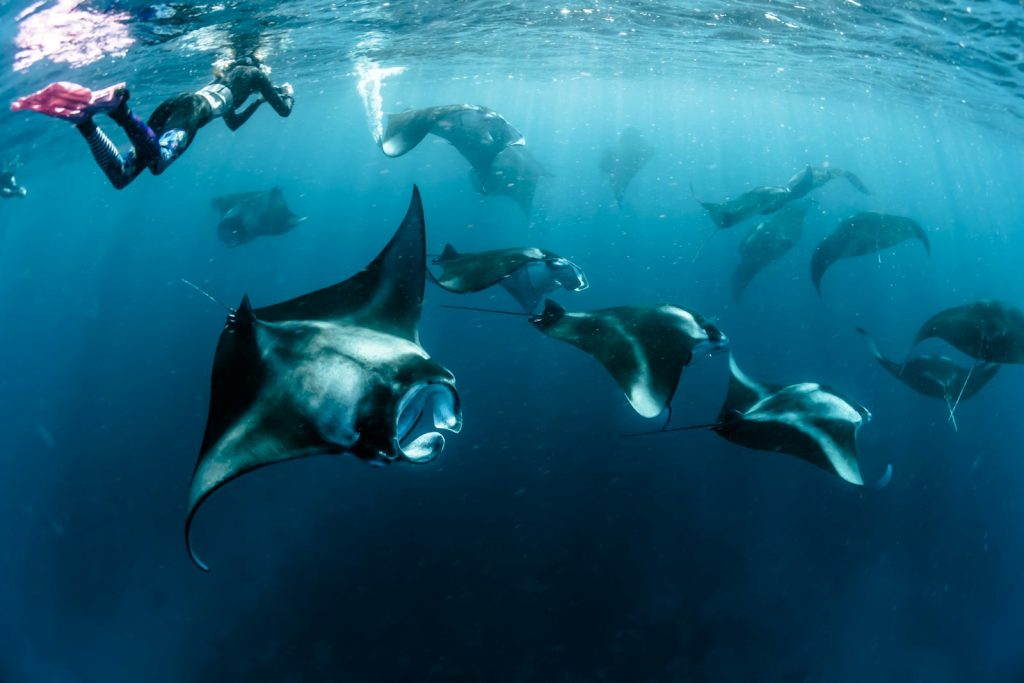
Dr. Karst’s research in Komodo began in collaboration with the Manta Trust, the UK-based organisation that maintains global manta ray identification databases. Her work contributed population-level data on Mobula alfredi — the reef manta ray — including photo-identification of individuals by their distinctive spot patterns, movement corridors between Komodo Island’s north and south sites, and behavioural responses to shifts in water temperature and plankton density. That fieldwork means she does not describe a manta encounter in the abstract. She can tell a guest, mid-briefing, why a particular cleaning station at Manta Point tends to be active on an incoming south current and quiet for an hour either side of slack water — and what the mantas are actually doing while they hover there, motionless except for the slow sweep of their cephalic fins.
What She Handles for Guests
On every cruise departure, Dr. Karst runs the marine ecology briefing before guests enter the water for the first time. It covers more than dive-site logistics. She contextualises what guests are about to see: why the reef at Gili Lawa holds more hard coral coverage than almost any comparable site in Indonesia, why the currents at Castle Rock aggregate fish biomass in ways that support daily Napoleon wrasse cleaning stations, and what the presence of whale sharks — occasional visitors on the outer sites — signals about plankton conditions at that moment. Guests leave the briefing with a framework, not just a list of species to spot. After more than six years of running these sessions, she adjusts the depth and register of the briefing by watching the group, not by following a script. First-time snorkellers and experienced technical divers get different conversations, both at the same high standard.
Dr. Karst also coordinates Komodo Liveaboard Cruises’ annual plastic-free anchorage pledge with the Komodo National Park Authority. In practice, this means every vessel in the fleet operates a closed-loop waste protocol at the twelve anchorages covered by the pledge — no single-use plastic exits the boat at those sites, crew conduct surface-line debris sweeps at each stop, and findings are logged and submitted to the park authority quarterly. The data is used. Several of the anchorages in the pledge overlap with known manta ray aggregation zones, and the protocol exists precisely because microplastic ingestion has been documented in filter-feeding elasmobranchs across the region. The pledge is not a branding exercise; it is directly connected to ongoing research.
A Personal Connection to Komodo
One observation that has stayed with Dr. Karst across ten field seasons: the reef at Batu Bolong responds measurably to lunar cycles in ways that most dive briefings do not mention. In the three days following the new moon, when tidal amplitude is highest and upwelling intensifies, the seamount’s resident schooling fish — bigeye trevally, rainbow runners, densely packed glass fish in the overhangs — compress into formations close enough to the reef face that the coral itself appears to move. She has observed this predictable behavioural compression on dozens of occasions, documented it in her field notes, and brings it up every time the cruise schedule aligns with the right lunar window. Guests who dive Batu Bolong on those specific tidal stages see something structurally different from what they would see forty-eight hours later. Knowing when to be somewhere, and why, is exactly the kind of knowledge that a decade of working the same reef system produces.
Areas of Expertise
- Manta ray population dynamics and individual photo-identification
- Coral reef ecology, Coral Triangle biodiversity
- Komodo National Park marine protected area management
- Marine conservation programme design and stakeholder liaison
- Guest marine biology education aboard liveaboard vessels
- Elasmobranchs of the Lesser Sunda Islands
Plan a Voyage
If understanding the marine environment is as important to your trip as the diving itself, the team can match you to an itinerary and departure where Dr. Karst’s briefings are scheduled. We have been curating Komodo liveaboard voyages since 2015 and have taken more than 10,000 guests through these waters — reach us on WhatsApp and we will have a tailored recommendation ready within hours.