Last reviewed July 2026 by the Komodo Liveaboard Cruises team; pricing and availability verified for the 2027 season.
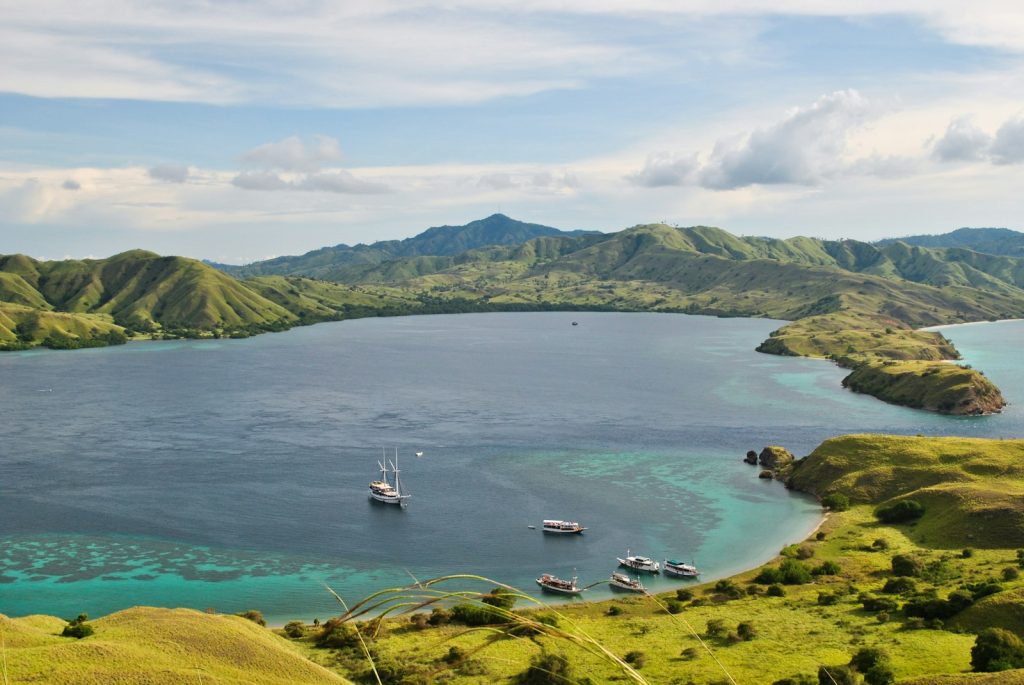
You can see Padar Island, Pink Beach, and Komodo Island in one trip. A fast day boat ticks all three boxes if you push the schedule. A 3-day, 2-night liveaboard does more than that. It puts you on Padar at first light, over Pink Beach in clear mid-morning water, and in front of the dragons while they are still active, with no part of the day lost to the clock or the heat.
Can You See Padar, Pink Beach and Komodo Island in One Trip?
Guests ask this constantly, and the answer has two halves. In a single day, yes, but you will race the whole way. The boat ride from Labuan Bajo to the park’s central waters runs one to two hours each direction. Add a sunrise hike on Padar (up at 5:30 AM, back aboard by 8:30 AM), a snorkel stop at Pink Beach, a dragon trek on Komodo or Rinca, and a two-hour return transit. You reach the harbour drained, damp, and unsure what you skipped.
A 3-day, 2-night liveaboard removes those constraints. You sleep at anchor 200 metres from the Padar trailhead. You cross to Pink Beach once the sun hits the right angle for snorkelling. You reach the ranger station on Rinca or Komodo Island in the afternoon, after the dragons leave their morning basking spots for the waterholes where you can watch them most easily. You stop treating the three sites as boxes to tick and start moving through them at the pace each one deserves.
Since 2015, Komodo Luxury has run these voyages for more than 10,000 guests. The founders grew up hearing the legend of the orang Bajo, the Bajo sea people who spent their lives aboard boats in these waters and read the tides the way others read maps. That relationship with the sea shapes every itinerary in the fleet. Entry to Komodo National Park carries a current fee of IDR 600,000 per person (2025 rate); all-inclusive trips usually fold this into the package.
Why a Liveaboard Makes All Three Possible
Run the arithmetic on a speedboat day trip from Labuan Bajo. You board at 7:00 AM, bounce across open water for 90 minutes, and reach Padar around 8:30, when sunrise has already passed its peak and the first day boats file up the trail. By the time you finish Pink Beach and Komodo Island, the afternoon heat has built and the dragons have backed into the shade. You dock by 5:00 PM with a phone full of photos taken just after the good light.
A liveaboard reorders the day. On Day 1 you sail out in the afternoon and anchor off Padar or Gili Lawa as the sun drops. You take sundowners on the forward deck, eat a full dinner under the stars, and fall asleep to water against the hull, a 10-minute tender ride from the trailhead. At 5:00 AM the alarm goes off and you step ashore into the blue-grey light before any other vessel gets close.
The boats that anchor this experience are luxury phinisi such as Prana by Atzaro and Lamima, both representative of the premium market. They work as floating boutique hotels: private sun decks, chef-prepared menus, air-conditioned cabins, and dive decks that hand you snorkel kit or scuba gear in minutes. We name these as charter examples for the luxury segment, not as part of any single operator’s owned fleet, and our team at Komodo Luxury will match you to the right vessel for your group size and style. A liveaboard solves the logistics and then turns the logistics into the trip itself.
Padar Island — Timing the Sunrise Hike
The view from Padar’s main ridge ranks among the most recognisable in Indonesian travel: three arcing bays curving away below, each a different shade. White sand sits to the east, black volcanic sand to the south, and a wash of pink to the west, the colours deepest in the minutes after the sun clears the horizon. To catch it at its best, reach the summit by 6:00 to 6:30 AM. Start the hike at 5:30 AM, which means you slept aboard a vessel anchored in the bay.
The trail rates moderate. It runs roughly 1.8 kilometres (1.1 miles) with about 177 metres (580 feet) of elevation gain, putting the viewpoint near 180 to 200 metres above sea level. The first quarter of the climb gives you the most trouble, a run of steep rocky switchbacks where grip shoes earn their place. Most fit walkers top out in 20 to 35 minutes, and a slower pace adds another 10. The last steps open onto a rocky plateau that sits like the prow of a ship, with the bays spread out beneath you.
A few notes before you lace up. Carry at least 500 ml of water per person, because the heat builds fast once the sun is fully up. The trail stays rocky and uneven throughout, so it does not suit guests with significant mobility limitations, though the view from a boat anchored in the eastern bay holds its own. When sunrise cloud cover runs heavy, which happens in the shoulder season, the late afternoon light from the same summit reads almost as well. Your liveaboard guide can read the day-of forecast for you.
Pink Beach — Best Time and What to Expect Below the Surface
Walk the shoreline of Pantai Merah, Red Beach on the map and Pink Beach to everyone else, and the sand tells you the story. The blush colour holds in full daylight. It comes from fragments of Tubipora musica, the red organ pipe coral, and from the calcium carbonate shells of red-pigmented foraminifera, single-celled organisms that live in the reef and wash ashore when they die. Mixed into the white carbonate base sand, they shift the beach from pale rose at midday to deeper coral pink in the golden hour.
Visit Pink Beach during the dry season, broadly April through October. Inside that window, May through September delivers the steadiest conditions: calm seas, near-zero swell, and underwater visibility that can pass 30 metres. July and August draw the most boats. If you want the beach with fewer vessels nearby, aim for May, June, or early October.
Below the surface, the snorkelling rewards even casual swimmers. The shallow fringing reef starts a few metres from shore, so you skip the long swim. Look down and you float above gardens of branching Acropora staghorn coral and broad table corals, dotted with clusters of organ pipe coral whose red columns explain why the beach looks the way it does. Green chromis damselfish hover in shifting formations over the coral heads. Clownfish tuck into their anemones, almost guaranteed on any pass. Butterflyfish (threadfin, raccoon, and peppered varieties) probe the coral for polyps while emperor angelfish and various wrasses work the mid-water column. Parrotfish graze audibly across the harder coral. On a calm, clear morning this counts among the most accessible snorkel sites anywhere in the Indo-Pacific.
Komodo Island vs Rinca Island for Dragons
Every first-time visitor wrestles with this choice, and the honest answer is that the two islands offer different experiences rather than competing ones. Komodo Island is the iconic pick, the island that gave the species its name. The ranger station at Loh Liang is well established, the trails run longer and more varied, and standing on the island that made David Attenborough’s career carries real weight. It draws more crowds, especially in peak season when several liveaboards share the same bay.
Rinca Island, about 1.5 to 2 hours by boat from Labuan Bajo, is the one many experienced guides quietly recommend for a first encounter. Dragon density near the ranger station at Loh Buaya runs high. Animals gather around the waterholes and kitchen buildings in the morning, and guests often spot several dragons within minutes of landing. The trails run slightly shorter, which makes Rinca the efficient pick when your itinerary is already full. It also tends to stay less crowded.
One myth needs dismantling: Padar Island has no Komodo dragons. The last resident population on Padar died out decades ago, almost certainly after their prey base collapsed. The three-bay view stuns and the hike rewards you, but the island belongs to the birds and the scenery now. For dragons you go to Komodo or Rinca, and you see them best in the morning, when they emerge to bask and move to water, before the hot midday hours when they turn lethargic and retreat into shade.
A standard 3D2N itinerary usually includes one dragon island, often Rinca for efficiency. Longer voyages of four nights or more take in both without strain. Ask our team which pairing fits your dates and priorities.
Sample 3D2N Island-Hopping Itinerary (2027)
What follows is a representative itinerary for a 3-day, 2-night Komodo liveaboard. Routes and stops shift with sea conditions, vessel, and group preferences, and your Komodo Luxury team will tailor the specifics before departure.
Day 1 — Embark in Labuan Bajo, Afternoon Snorkel, Sunset at Anchor
You embark at midday or early afternoon from Labuan Bajo harbour. Your vessel clears the bay and enters park waters within the hour, then drops anchor off Gili Lawa Darat or a similar reef site for an afternoon snorkel that warms you up for the days ahead. The current here can run strong, which makes it good for drift snorkelling. Schools of batfish, pyramid butterflyfish, and the occasional whitetip reef shark show up often. Back on deck, the crew serves sundowners as the light goes amber over the ridgelines. The vessel repositions to an anchorage near Padar overnight, with the trailhead in view from the stern.
Day 2 — Padar Island Sunrise, Pink Beach, Dragon Trek on Rinca
The alarm goes at 5:00 AM. A tender lands you ashore by 5:20 AM and you climb in the dark, torches lighting the rocky switchbacks. By 6:00 AM you stand on the ridge as the three bays surface out of the pre-dawn haze and colour floods the sky. You are back on board by 8:30 AM for a full breakfast, then the vessel sails to Pink Beach, roughly 30 to 45 minutes away, timed for when the sun rides high enough for clear water. Two hours of snorkelling, a beach walk, then lunch on deck as the boat makes for Rinca. The dragon trek at Loh Buaya starts at 3:00 to 4:00 PM, when the animals stay active near the waterholes. Dinner at anchor in the quiet southern waters of the park.
Day 3 — Morning Snorkel at a Premier Reef, Return to Labuan Bajo
One last dive-site stop before the return, Batu Bolong or Crystal Rock, for serious fish biomass and a shot at manta rays (more likely outside peak dry season). Divers rate Batu Bolong among the most productive coral pinnacles in Southeast Asia, while snorkellers on the surface above it watch enormous schools of snapper and trevally work the current. By 10:00 AM the vessel is underway back to Labuan Bajo and arrives in the early afternoon. The ride from the harbour to your first hotel room takes under 15 minutes.
Planning Your 2027 Trip with Komodo Luxury
A trip that folds Padar, Pink Beach, and the dragons into 72 hours tops the request list in the Komodo Luxury portfolio, and for good reason. It packs the greatest concentration of spectacle in Indonesian waters into a long weekend and a short-haul flight from Bali or Jakarta to Labuan Bajo (LBJ airport).
Our team has matched guests to the right vessels in these waters since 2015. We know which boats hold stable in the Flores Sea swell, which captains read the tides at Padar best, which chef turns the sunrise return to the deck into a five-star breakfast. For couples who want a private phinisi or luxury yacht, we have options. For solo travellers and small groups who want the open-trip experience, with shared cabins, fellow adventurers, and strong guiding at a more accessible price, we have those too.
Peak 2027 dates, especially April through October, fill months ahead. If you plan a trip around school holidays, a honeymoon, or a long-haul route with Komodo at the centre, enquire now.
Message our team on WhatsApp at wa.me/628113823875 or email [email protected], and we will recommend the right boat and itinerary for your 2027 dates. Explore the full Komodo Liveaboard Cruise options or dig into the Komodo Liveaboard Guide.
Frequently Asked Questions
- Can I see all three — Padar, Pink Beach and Komodo Island — in one trip?
- Yes. A 3-day, 2-night liveaboard covers Padar Island’s sunrise hike, snorkelling at Pink Beach, and a ranger-guided dragon trek on Komodo or Rinca Island. A single day boat can visit all three, but it rushes you and you miss the best light at each site.
- What is the best time for the Padar Island sunrise hike?
- Start the trail at 5:30 AM to reach the summit by 6:00 to 6:30 AM, when first light hits the three bays below. The 1.8 km moderate hike takes 20 to 45 minutes. Sleeping aboard a liveaboard anchored in the bay the night before is the only way to reach the trailhead this early.
- Is Komodo Island or Rinca better for seeing dragons?
- Guides often recommend Rinca Island for efficiency and higher dragon density near the ranger station, which suits a 3D2N itinerary. Komodo Island is the iconic namesake and offers longer trails and a broader experience. Both run ranger-guided treks, and morning visits (before 11 AM) work best, when the animals are most active.
- What is the best time to visit Pink Beach in Komodo?
- April through October covers the dry season, when seas stay calmest and visibility clearest. May to September is the peak window, with underwater visibility sometimes past 30 metres. Morning visits give you the calmest water; midday gives the best light angle for snorkelling and photography.
- How many days do I need for a Komodo island-hopping itinerary?
- Three days and two nights is the ideal minimum for Padar, Pink Beach, and one dragon island. Four nights adds a second dragon island (both Komodo and Rinca), more dive sites, and a more relaxed pace. Five nights or more opens up sites like Manta Point, Taka Makassar, and the remote northern reaches of the park.
- What are the current Komodo National Park entrance fees?
- The current entrance fee is IDR 600,000 per person (2025 rate). Ranger and trekking fees are additional and vary by trail. Many all-inclusive liveaboard packages absorb these costs into the trip price. Confirm with your operator what is and is not included before departure.
- How far in advance should I book a 2027 Komodo liveaboard?
- For peak months (April to October), book 4 to 6 months ahead. Some premium vessels and honeymoon dates are already being reserved for the 2027 season. Shoulder months (November to March) leave more flexibility, but the best vessels still fill quickly. Reach out to our team to check live availability.