Last reviewed July 2026 by the Komodo Liveaboard Cruises team; pricing and availability verified for the 2027 season.
Yes, Komodo liveaboards are safe when you book a certified, reputable operator. Indonesian law requires every commercial vessel to carry a sea-worthiness certificate, SOLAS-compliant life-saving equipment, and a licensed crew. Strong Flores Sea currents and shifting sea states make your choice of operator matter more than the destination. Pick a good one and a Komodo liveaboard becomes one of the safest, most rewarding ways to see the archipelago.
Are Komodo Liveaboards Safe? The Complete 2027 Picture
Yes, with the right operator. Indonesia signed the SOLAS (Safety of Life at Sea) convention, and domestic liveaboards working Komodo National Park answer to Kementerian Perhubungan (the Ministry of Transportation, “Dishub”). The Harbour Master, the Syahbandar based in Labuan Bajo, inspects vessels before they depart. Every boat must carry a current sea-worthiness certificate, a passenger license, and safety documentation. Reputable operators hold all three and show them on request.
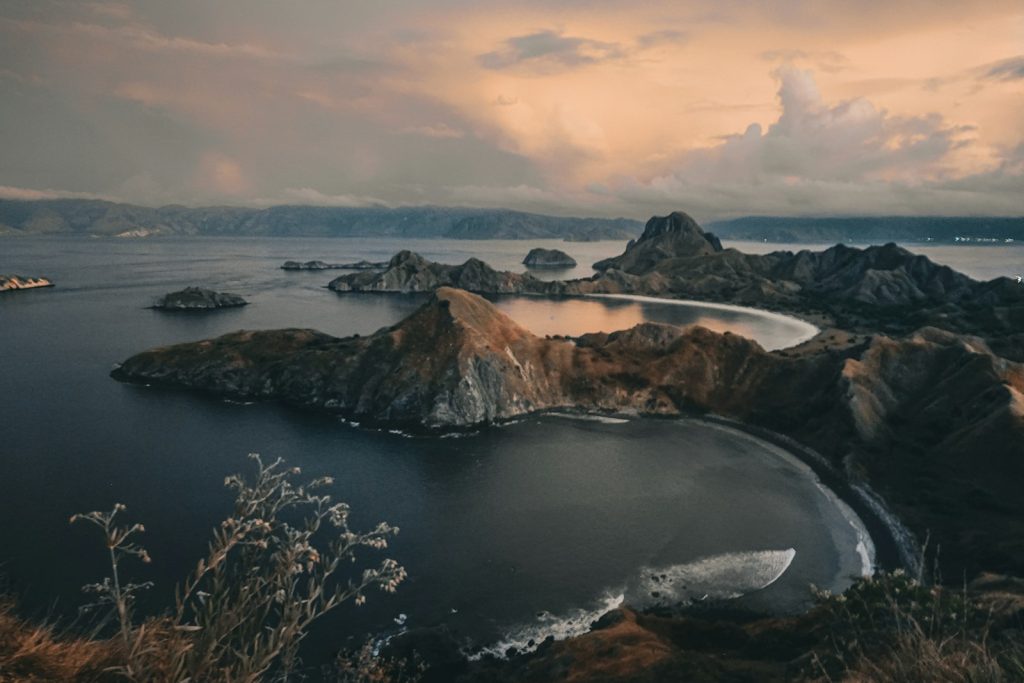
Tens of thousands of guests sail the Komodo route each year, and serious incidents stay rare against that volume. They come for the manta cleaning stations at Manta Point, the hike up Padar’s volcanic ridgeline, the surge at Batu Bolong, and the pink coral sand of Pantai Merah. The water demands respect. The Flores Sea channels strong tidal currents through the passages between Komodo, Rinca, and Banta Islands, and conditions change by season. None of that is unique to liveaboards, and all of it explains why your choice of operator is the most important safety decision you make.
The Bajo people, the sea nomads who gave Labuan Bajo its name, navigated these channels for centuries. They read tides and reefs with an accuracy no instrument has improved on. That knowledge now sits with the skippers and dive guides aboard the best liveaboards. Boat design has moved from working phinisi to purpose-built luxury yachts. The seamanship has not.
The incidents that reach headlines almost always trace to the same causes: uncertified budget operators, neglected equipment, or passenger numbers loaded past the licensed limit. A credible curation service screens those boats out before you board. Read our full Komodo liveaboard guide for more on planning a safe voyage.
Are Wooden Phinisi Boats Safe in Komodo National Park?
We field this question more than any other, and the answer is yes for a quality-built, well-maintained phinisi. The phinisi is a traditional Indonesian double-masted schooner with Bajo roots. Over the past twenty years, builders have redesigned the best ones as dive liveaboards and luxury yachts, adding watertight bulkheads, marine-grade diesel engines, modern navigation systems, and formal stability calculations. These are purpose-designed vessels, not converted fishing boats. Builders frame them in ironwood (ulin), a timber harder than most structural woods and resistant to tropical marine borers.
A quality phinisi carries a current Dishub sea-worthiness certificate, the SPB (Sertifikat Kelaikan dan Pengawakan Kapal), a confirmed passenger capacity, and hull and liability insurance backed by an independent marine survey. That last point carries weight. Commercial insurers send a marine surveyor to inspect the vessel before they write hull coverage, so any operator with valid hull insurance has had a professional sign off on the boat’s structure. Ask for the survey year and the insurer’s name before you book.
Vessels at the Prana by Atzaro or Lamima tier dry-dock every year for hull and engine inspection. That schedule is not optional. Insurance renewal and Dishub re-certification both demand it. A poorly converted fishing phinisi, by contrast, may run with no bulkheads, no stability data, and no maintenance record at all.
On Komodo routes your exposure window stays short. Most crossings from Labuan Bajo to Rinca, Komodo, Padar, Gili Lawa, or Taka Makassar run under four hours. The Flores Sea can throw 2-3 metre swells at exposed northern routes during the January to March northwest monsoon. From April through June and September through November, park crossings usually see waves under 1.5 metres, which a well-found phinisi handles in comfort.
What Makes a Safe Komodo Liveaboard: The Checklist
Run this list against any operator’s reply before you book, then look for each item with your own eyes on boarding day.
Life-saving equipment: SOLAS-approved life rafts with capacity for every person aboard, and check that the servicing label is in date. Life jackets within reach in every cabin. Lifebuoys with floating lines visible on deck. A marked muster station.
Fire safety: smoke and heat detectors in all cabins, the galley, and the engine room. Fire extinguishers spread through the boat, the galley, the dive deck, and the engine room, each carrying a visible inspection tag. No smoking near the fuel deck or the compressor. Any compliant vessel treats these as baseline.
Navigation and communication: VHF marine radio, GPS plotter, and an AIS transponder. Premium vessels add an EPIRB (Emergency Position Indicating Radio Beacon), which broadcasts your coordinates to search-and-rescue the moment you activate it. A satellite phone backs that up on remote itineraries beyond mobile coverage.
Medical and dive safety: emergency oxygen on the dive deck, regulators and masks ready to use. A full first-aid kit. An AED (automated external defibrillator) on longer itineraries. Dive guides who plan every entry around live tide data instead of a fixed clock. Castle Rock, Batu Bolong, and Crystal Rock all demand precise slack-water timing to stay safe, even for divers with current certifications.
The muster drill tells you the most, and guests overlook it the most. Every reputable liveaboard runs a safety briefing inside the first hour aboard: where the life jackets sit, how to leave your cabin at night, where to muster, how to fire the emergency beacon. If you board and nothing happens, ask for it. If it still does not happen, walk away. Browse our luxury liveaboard fleet, where every boat we recommend runs a formal safety briefing as standard.
Are Cheap Komodo Liveaboards Safe?
Not reliably. Budget liveaboards priced under roughly USD 150 per person per night are the segment where safety compromises cluster. Very low prices and cut corners correlate, even where the link is not universal. The shortcuts run a familiar pattern: expired or missing Dishub sea-worthiness certificates, no independent marine survey, no EPIRB, thin emergency oxygen, crew without first-aid or oxygen-provider certification, and passenger counts loaded past the licensed limit.
Indonesian enforcement keeps tightening. The Syahbandar in Labuan Bajo inspects vessels, and maritime authorities have stepped up scrutiny of the Komodo liveaboard sector. Coverage is uneven, though. Boats sail often, and inspectors do not check every vessel before every departure. Part of the verification falls on you.
Do this before you book any boat: ask the operator to email you the SPB certificate number, the vessel registration number, and proof of hull insurance. Reputable operators send the documents within hours. If the reply turns vague or never lands, look elsewhere. This is the evidence that the boat clears the legal bar to carry you across the Flores Sea.
The nearest recompression chamber to Labuan Bajo sits at BIMC Nusa Dua hospital in Bali, with another in Makassar, a 1-2 hour air evacuation from Labuan Bajo Airport (LBJ). In a decompression emergency, what stands between you and that chamber is the boat’s emergency oxygen supply, the crew’s first-aid training, and how fast the operator can coordinate a medical evacuation flight. A boat that skimps on oxygen and crew training strips out the most important safety margin in that chain.
Are Komodo Liveaboards Safe for Solo Female Travelers?
Yes. On reputable boats, Komodo liveaboards are safe and welcoming for solo female travelers, and some of the most loyal guests in our network are women who have sailed solo more than once. Operator reputation and boat design drive the outcome, not the destination.
Look for private cabins with lockable doors, standard on premium phinisi and yachts and on most mid-range boats. Look for a defined crew conduct policy and a mixed international guest list. Quality Komodo liveaboards draw guests from Europe, Australia, the US, and Singapore, communities of serious divers and active travellers who care about the diving over the social scene.
Before you book, read recent reviews for mentions of solo female experiences on Google, TripAdvisor, and women-focused dive travel forums like Women Who Dive. Ask the operator whether cabins lock from the inside, what the crew conduct policy covers, and whether they can share testimonials from past solo female guests. Operators who answer without dodging are the ones to trust.
Most solo female guests find the group dynamic warmer than they expected. A sunrise hike up Padar, a manta encounter at Manta Point, and a communal dinner off a curated menu build camaraderie fast. Quality boats fit lit walkways, non-slip teak decks, handrails on every exterior stair, and automatic emergency lighting, design standards built into each vessel we recommend.
Travel Insurance for a Komodo Liveaboard: What You Actually Need
You need travel insurance, and most standard policies fall short. Generic travel insurance often excludes scuba diving, dives below 30 metres, nitrox (enriched air) use, multiple dives per day, and anything classed as liveaboard or offshore boating. Read the sports and hazardous activities section before you buy. Get written confirmation that the policy covers your maximum planned depth (Komodo sites like Blue Hole reach 30m and beyond), multiple daily dives (3-4 is standard on a diving liveaboard), enriched air nitrox if you hold the certification, and emergency medical evacuation to a hyperbaric recompression chamber.
The industry points to DAN (Divers Alert Network) diving insurance. DAN covers decompression illness, arterial gas embolism, emergency evacuation, and hyperbaric treatment, the exact scenarios generic policies exclude or cap well below the real cost of an air evacuation and chamber treatment out of Eastern Indonesia.
Quality operators in Komodo tell guests to carry DAN coverage, and our team should know your policy details before your first dive. Non-divers on a snorkelling and trekking liveaboard need standard travel insurance that covers emergency medical evacuation, which in Komodo means a charter or medical flight from Labuan Bajo Airport to Bali. Medical facilities in Labuan Bajo keep improving but stay limited for serious cases. Carry your insurance documents and your DAN card on the boat.
How Komodo Luxury Vets Every Boat We Recommend
Since 2015, Komodo Luxury has curated liveaboard voyages for more than 10,000 guests. We do not run a listing platform where any boat signs itself up. Our curation starts with a physical inspection. Our team travels to Labuan Bajo, steps aboard, and checks the vessel against a list that meets and beats Indonesian regulatory requirements.
Before any vessel joins the fleet, we verify a current Dishub SPB sea-worthiness certificate, a valid passenger license within capacity, hull and liability insurance backed by a named independent marine surveyor, a documented annual dry-dock record, an emergency oxygen system at the dive deck with an in-date regulator inspection, EPIRB registration, and crew qualification documents down to the dive guides’ certification levels. A boat that cannot answer cleanly on every item stays off our list.
We weigh the softer signals too: how the dive guide explains current management at Castle Rock and Shotgun, whether the captain knows the tidal windows from memory, how the galley handles dietary requirements and cross-contamination. The Bajo sea nomads who first worked these channels treated seamanship as a culture, not a certificate. The operators we work with carry that culture forward.
Our team reviews each vessel assessment every year. When something changes, a new owner, a boat back late from dry-dock, a crew turnover, we revisit before we recommend it for the next season. You get a curated fleet you can book with confidence, whether you want a 3-night introduction to Komodo or a 9-night expedition into the outer Flores Sea.
Ready to plan your 2027 Komodo voyage with a boat you can trust? Contact our team on WhatsApp: wa.me/628113823875 or email [email protected]. Our team will recommend the right boat and itinerary for your travel dates, experience level, and group size. Explore our full liveaboard cruise options or see our luxury fleet to start your search.
Frequently Asked Questions
- Are Komodo liveaboards safe?
- Yes, when you choose a reputable operator that holds current Indonesian maritime certifications (Dishub SPB), carries SOLAS-standard life-saving equipment, and employs trained, qualified dive guides. Incidents stay rare against the high annual voyage count. Operator selection is the most important safety variable on any Komodo trip.
- Are wooden phinisi boats safe in Komodo National Park?
- Yes, when properly certified and maintained. Quality phinisi hold current Dishub sea-worthiness certificates, undergo annual dry-dock surveys, and carry hull insurance backed by an independent marine survey. Purpose-built luxury phinisi have watertight bulkheads and formal stability data, which sets them apart from repurposed fishing vessels.
- Are cheap Komodo liveaboards safe?
- Not reliably. Budget boats under USD 150 per person per night are where safety shortcuts cluster: expired certificates, absent EPIRBs, thin oxygen supplies, and untrained crew. Before booking at any price point, request the SPB certificate number and hull insurance documentation. If the operator cannot provide them quickly, choose a different boat.
- Are Komodo liveaboards safe for solo female travelers?
- Yes, on reputable operators. Look for private cabins with lockable doors, a clear crew conduct policy, and a mixed international guest demographic. Read reviews that mention solo female experiences and ask the operator about their safety policies. Quality operators since 2015 have strong track records with solo female guests who sail repeatedly.
- Do I need travel insurance for a Komodo liveaboard?
- Yes, and most standard policies fall short. Generic travel insurance often excludes scuba diving, nitrox, and emergency evacuation to a recompression chamber. DAN (Divers Alert Network) diving insurance is the industry-standard recommendation, covering decompression illness, arterial gas embolism, and hyperbaric evacuation from Labuan Bajo to Bali.
- What is the nearest recompression chamber to Labuan Bajo?
- The nearest hyperbaric recompression chambers are at BIMC Nusa Dua hospital in Bali (Denpasar) and in Makassar, roughly a 1-2 hour air evacuation from Labuan Bajo Airport (LBJ). Quality operators keep active emergency protocols and liaise with DAN Asia-Pacific for rapid coordination during decompression emergencies.
- What safety equipment should be on a Komodo liveaboard?
- Essential equipment includes in-date SOLAS life rafts, life jackets in every cabin, fire extinguishers with inspection tags throughout the boat, emergency oxygen at the dive deck, VHF marine radio, GPS, and an EPIRB emergency beacon. A formal muster safety briefing within the first hour of boarding is standard, and its absence is a clear red flag.
Your 2027 Komodo voyage deserves both wonder and the peace of mind that comes from a fully vetted fleet. Message us on WhatsApp: wa.me/628113823875 or email [email protected]. Our team will match you to the right boat, the right itinerary, and the right season across the waters of Komodo National Park. We have done this since 2015. We know these boats, these guides, and these waters.