Last reviewed July 2026 by the Komodo Liveaboard Cruises team; pricing and availability verified for the 2027 season.
Komodo liveaboard seasickness hits fewer guests than nervous first-timers expect. Most boats sail the north and central reaches of Komodo National Park in Beaufort 2 to 3 water, with wave heights between 0.3 and 1.0 metres, right through the dry season from May to October. Pick the right month, the right boat, and a midship cabin, and you will likely finish the whole voyage without a hint of nausea.
How Rough Is the Sea in Komodo?
The waters around Komodo are not a glassy mill-pond, and they are not the heaving North Atlantic either. Three things shape conditions here: monsoon direction, island geography, and the tidal exchanges that feed the richest marine habitat in Indonesia.
The Southeast Monsoon dry season runs May through October. Prevailing SE to E winds keep the north and central park unusually settled. Significant wave heights sit at 0.3 to 1.0 metres. You feel a gentle rocking, barely enough to move a half-full glass of water. Channels can throw up 1.5-metre chop for a stretch, but captains route most itineraries around the worst of it. The Northwest Monsoon wet season, December to March, rewrites the math. Squalls can push exposed routes into Beaufort 5 to 6, with short steep seas of 2 to 4 metres. On the rare bad day, usually in January or February, boats stay in port. April and November fall in between, fine for the most part, squally now and then.
Here is what most travel guides miss: currents define the Komodo experience, not swell. Tidal flows squeeze between the islands and gain speed through the constrictions of Sape Strait and Linta Strait, hitting 4 to 6 knots at peak. When those currents run against the wind, they kick up a short, confused, steep chop that tests the stomach far more than its modest wave height suggests. Good captains time these passages at slack tide. The experienced ones do it before you think to ask.
Where It Gets Bumpy vs Calm
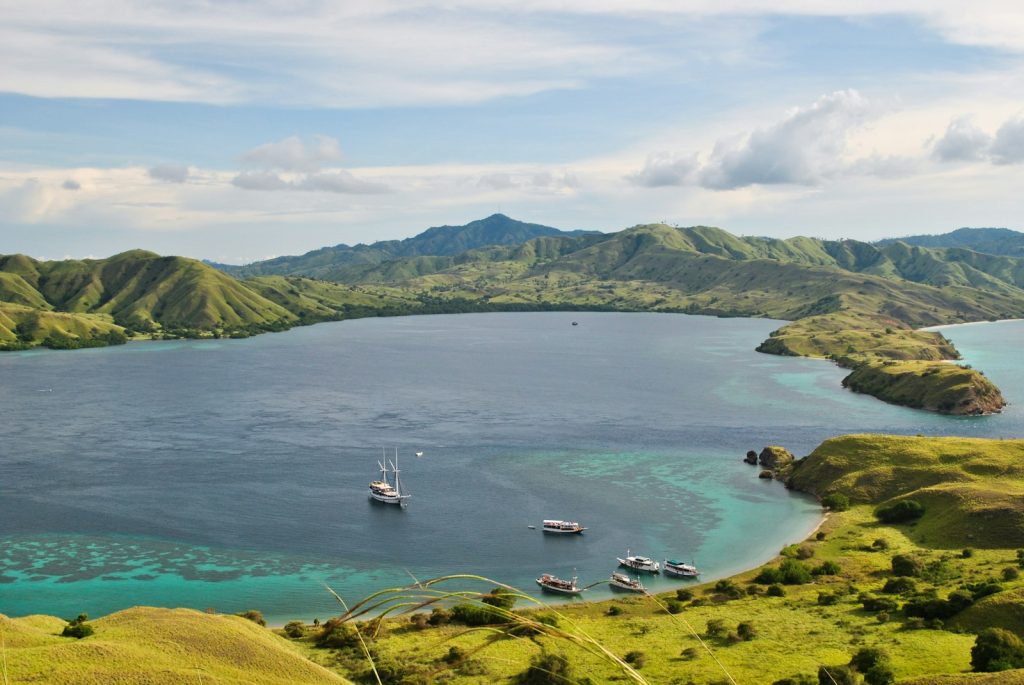
Komodo is not exposed evenly, and reading the geography can settle your nerves. The north and central sectors hold the dive sites of Batu Bolong, Crystal Rock, and Gili Lawa, and the island chain shelters them year-round. Anchorages here feel like lake sailing: glassy at dawn, a light chop by mid-afternoon once the sea breeze fills in.
South Komodo runs a different course. It sits closer to the open Sumba Sea, so it catches more wind at the height of the dry-season trades, July and August above all. Beaufort 4 conditions, wave heights of 1 to 2 metres with small whitecaps on most waves, show up often on south-facing passages. Guests who know they get motion sickness can stay in the sheltered north and still hit every headline attraction.
The Flores Sea passage from Bali to Komodo, a route liveaboards departing Denpasar favour, is semi-enclosed and moderate most of the year. During the northwest monsoon it can throw 1 to 3 metre swell on exposed legs overnight. The run from Labuan Bajo into the park is short, and dry-season guests often call it barely noticeable. The Sape Strait, between Sumbawa and Komodo island, is the one corridor that swings. Respect it, plan for slack tide, and it stays manageable. Get caught mid-strait with a spring ebb pushing against the SE trades, and the short steep seas remind you fast that you are at sea.
Boat Stability — Phinisi vs Catamaran vs Speedboat
The boat you pick shapes your trip more than any month on the calendar. The traditional phinisi, those broad-beamed double-masted wooden schooners descended from the Bajo sea nomads who have worked these straits for centuries, run from about 20 to 40 metres long. Their heavy, low displacement hulls damp wave action far better than a light fibreglass hull. A larger phinisi, say 35 metres with an 8-metre beam, sits in the water with authority. You feel the sea, but in a measured rolling way that most guests find more soporific than alarming after the first hour. Boats like the Prana by Atzaro and Lamima sit at the upper tier of the luxury phinisi category, their hull forms built as much for comfort as for performance.
Catamarans flip the equation. Their twin hulls cut most of the rolling motion that a phinisi feels in beam seas, which makes them the pick for guests who know motion sickness will be a problem. They pitch a touch more stiffly in head seas, and a minority of people find that harder to take than a roll. If your seasickness history runs to cars and buses rather than boats, a catamaran is probably your cleaner answer.
Speedboats handle transfers, not liveaboards. Their light hulls and high speed turn every chop into a jarring slam, fine for a 20-minute hop between islands, rough for an overnight passage. If you want a Komodo liveaboard cruise so you can sleep aboard rather than race between daytrip stops, book a phinisi or a dedicated liveaboard.
Best 2027 Months for Calm Seas
Matching your 2027 departure to the seasonal calendar is the single biggest move you can make for sea comfort. Here is how the year breaks down.
The Driest, Smoothest Window: Late April to June
Late April opens the Southeast Monsoon dry season, and the shift shows within days. Winds settle into a reliable SE direction, seas in the north and central park ease to Beaufort 2 or a gentle 3, and underwater visibility climbs toward 30 metres at sites like Batu Bolong. June is the finest sailing month of the year: warm, dry, long days, and the sea at its most settled. If you genuinely worry about seasickness, target this window on your 2027 calendar. It also lands before the July and August tourist surge, so berths on premium boats come a little easier.
July and August — Windier but Still Manageable
These two months draw the biggest crowds, partly because they line up with European summer holidays and partly because the conditions, windier as they are, still suit most guests. The SE trades blow harder. Beaufort 4 shows up more on exposed passages, with wave heights touching 1.5 to 2 metres in the south and around the Sape Strait. North and central routes stay calmer. The trade wind actually improves the sailing on a phinisi under sail, and the stronger current at dive sites like Castle Rock draws serious divers who come for exactly that. If July or August is your only viable window, book a larger phinisi, take a midship lower cabin, and pack your meclizine. You will be fine.
September and October — The Sweet Spot
As August closes, the trades start to ease. By late September, conditions across the park match late April through June: Beaufort 2 to 3, the odd light chop, water that looks almost glassy by early morning. October stretches that calm right to the edge of the transition. These months also pull the south Komodo sites, often off-limits during peak SE trades, back onto itineraries. A late-September or October voyage can cover more ground with less discomfort than any other window. Our guide to the best time to visit Komodo in 2027 has the full month-by-month breakdown.
How to Prevent Seasickness on a Komodo Liveaboard
Even on the calmest days, a small share of guests feel queasy. Susceptibility to motion sickness comes down to physiology, not nautical experience. Smart planning, the right cabin, and the right medication keep most prone travellers comfortable across a multi-day voyage.
Cabin Choice Matters
The physics are plain. The farther you sit from the boat’s pivot point, the more motion you feel. On a phinisi the pivot point sits around amidships, so a midship lower-deck cabin is your quietest address. The bow pitches up with every wave and drops again, and a bow cabin at the waterline will wake you on a bumpy night. A high-deck cabin sits at the end of the roll lever and exaggerates the side-to-side movement. When you book, ask for the most central, lowest cabin available and say you are prone to motion sickness. A reputable operator will sort it. Skip cabins right above the engine room if smell bothers you, because engine fumes set off nausea in a lot of people.
Medications That Work
The drug options run from gentle to powerful. Meclizine, sold as Bonine in many markets, is the first choice for most travellers. You take it once a day, it sedates you far less than classic Dramamine (dimenhydrinate), and it covers a full 24 hours. If you go with dimenhydrinate, take it the night before you board and again 1 to 2 hours before departure. Test your drug on land first, because some people get too drowsy to enjoy a full day of diving and trekking.
For multi-day voyages and a real history of severe motion sickness, the scopolamine transdermal patch (Transderm-Scop) is the gold standard. You apply it behind the ear the day before boarding, and it delivers 72 hours of steady relief without the on-and-off drowsiness of oral drugs. Dry mouth and a slight blur in your near vision come with it, but most people tolerate them. It needs a prescription, it does not suit anyone with glaucoma, and you should never try it for the first time on day one at sea. Sort it out weeks before your trip.
Natural Remedies and On-Board Habits
Ginger has a long, evidence-backed run as a gentle antiemetic. Carry it in every form, capsules at 500 mg with meals, crystallised chews, or good tea bags, and use it steadily through the voyage instead of waiting until you feel ill. Acupressure wristbands press the P6 (Neiguan) point on the inner wrist. They use no drugs, carry no side effects, and help a good share of users. They work best alongside medication, not in place of it.
On board, behaviour counts as much as chemistry. When the seas pick up, get on deck into the fresh air, and stand midship at rail height. Look at the horizon or a distant island. When you feel sick, your inner ear is arguing with your eyes, and a stable fixed point for your vision settles most of that fight. Put the phone and the book away when it gets choppy. Eat small, bland meals, crackers, plain rice, toast, rather than the full breakfast buffet before a crossing. Drink water and electrolytes, and skip alcohol, which worsens dehydration and the nausea that rides with it. One fact surprises many guests: once you are underwater, motion sickness vanishes within seconds. Drop below the surge zone at a dive site and your body stops registering the surface chop.
Choosing a Stable Boat and Smooth Itinerary
The Bajo people, the sea nomads who gave Labuan Bajo its name and spent their lives aboard wooden boats in these straits, read tidal streams the way inland people read roads. Their seamanship still shapes how every good captain works Komodo waters today. Book through a curated operator instead of a budget aggregator and part of what you pay for is that judgment: captains who know which night crossing to time at slack tide, which south-Komodo site to swap when the SE trades run hard, which anchorage in the lee of Rinca stays flat when everywhere else turns choppy.
At Komodo Luxury, we build every itinerary we recommend around calm-water routing. We keep guests in the sheltered north and central sectors, time Sape Strait transits to slack tide, and adjust the plan when conditions demand it. When a guest tells us they get seasick, we match them to a larger, steadier boat and assign a midship lower cabin by default. This is basic seamanship turned toward guest comfort, not a luxury add-on. Our team has worked these waters since 2015 and guided more than 10,000 guests through them, so we know which boat, route, and month fits which traveller.
For a closer look at the day-to-day onboard, read our complete Komodo liveaboard guide. For premium fleet options with stronger stability and service, see our luxury Komodo liveaboard page.
Frequently Asked Questions
Do people get seasick on a Komodo liveaboard?
Seasickness is uncommon on Komodo liveaboards, especially during the dry season (May–October), when wave heights in the sheltered north and central sectors average 0.3 to 1.0 metres. Guests who get motion sickness usually finish the voyage without trouble if they take medication, choose a midship lower cabin, and sail in late April–June or September–October.
How rough is the sea in Komodo National Park?
During the dry season, the north and central park sees Beaufort 2 to 3 most days, gentle to slight seas with wave heights of 0.3 to 1.0 m. July and August bring Beaufort 4 on exposed south Komodo passages (1.5 to 2 m). The wet season (December–March) can produce Beaufort 5 to 6 squalls with 2 to 4 m seas on exposed routes, though north Komodo stays sheltered.
Which boats are most stable for seasick-prone travelers?
Catamarans roll the least thanks to their twin-hull design, which makes them a strong pick for guests with a real history of motion sickness. Among phinisi, larger boats (30 to 40 m, wider beam) ride steadier than smaller ones. Speedboats suit multi-day trips the least, so avoid them if seasickness worries you.
What is the best time to do a Komodo liveaboard to avoid seasickness?
Late April through June and late September through October are the calmest windows for a Komodo liveaboard. These months sit in the stable part of the SE monsoon dry season, before and after the peak trade winds of July and August. Seas in the north and central park average Beaufort 2 to 3, the lowest-risk choice for motion-sickness-prone travelers.
What cabin should I choose to minimise motion on a phinisi?
Request a midship, lower-deck cabin. This spot sits closest to the boat’s pivot point, so it cuts both pitch (front-to-back rocking) and roll (side-to-side). Bow cabins get the most pitch, and high-deck cabins exaggerate the roll. If you get seasick, say so when you book, and a reputable operator will assign you the steadiest berth available.
Which seasickness medications work best for a multi-day liveaboard?
For multi-day trips, the scopolamine transdermal patch (prescription only) works best. Apply it behind the ear the day before boarding and it gives 72-hour relief. For over-the-counter options, once-daily meclizine (Bonine) sedates you less than dimenhydrinate (Dramamine). Always test your medication on land first, and check with a doctor before combining medications.