Editorial disclosure: This guide is written by the Komodo Liveaboard Cruises team, part of Komodo Luxury, which arranges charter bookings for some of the vessels featured. We aim to present accurate market pricing across every tier.
Last reviewed August 2026 by the Komodo Liveaboard Cruises team; pricing and availability verified for the 2027 season.
The best time to visit Komodo National Park in 2027 is April through June, and again September through early November. Both windows give you calm seas, peak diving visibility of 20–30+ metres, active Komodo dragon sightings, and crowds you can still escape. They are the two best entry points for a Komodo liveaboard in 2027.
Best time to visit Komodo in 2027
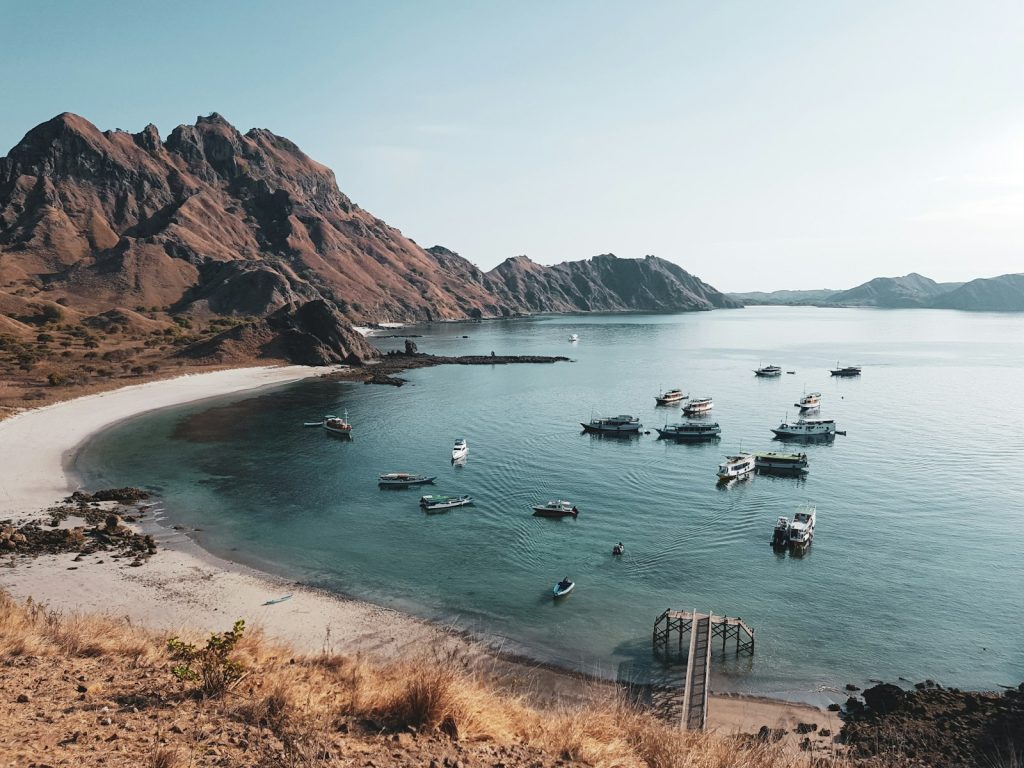
Plan your 2027 voyage for April to June or September to early November. These shoulder periods line up the three things that decide a trip: marine life, dragon treks, and a comfortable boat. Seas stay calm enough for sailing, visibility at Castle Rock and Batu Bolong often passes 25 metres, and the hills of Padar show up either lush green or burnished gold, depending on the window you pick.
People sailed these waters long before tourism arrived. The Bajo, the sea nomads of the Lesser Sunda Islands, built their lives on boats in Labuan Bajo’s harbour for generations and read the tides and reefs the way the rest of us read roads. Crews still sail the same channels aboard luxury phinisi and private yachts today. You feel that lineage in the daily rhythm of a voyage: sail, sleep, eat, dive, trek. Picking the right season is part of sailing those waters well.
We have curated these voyages at Komodo Luxury since 2015 and have hosted more than 10,000 guests across every season. Here is our advice. Do not anchor your whole 2027 decision on weather. Season shapes the conditions; your dates and what your group cares about should shape the season you pick.
Dry season vs wet season explained
Komodo National Park runs on two seasons, and knowing both saves you from a costly mismatch between what you expect and what you get.
The dry season runs from roughly April through October. Rainfall drops off, skies stay cloudless for days, and the southeast trade winds blow hard from June through August. Those trades drive cold-water upwelling that pulls the sea surface temperature at southern dive sites down to 23°C, so divers pack a 5 mm wetsuit from July onwards. Visibility in the central and northern zones reaches 20–30+ metres. By August the hills of Padar and Komodo Island fade from jungle green to tawny savannah.
The wet season spans November through March. January and February test sea travel the hardest: swells build in the exposed channels, and some liveaboard operators cut back their schedules. The wet season earns its keep in the south, though. Nutrient-rich currents pour through Manta Alley off south Komodo and pull in large groups of oceanic manta rays from December through March. If manta encounters drive your trip, the green season deserves a serious look.
The komodo dry season vs wet season for islands question comes down to what you want to do on the water. Divers chasing visibility and current-riding at Castle Rock should sail in the dry season. Photographers hunting manta aggregations in moody light should head south in the wet.
Month-by-month 2027 breakdown
Use the table below to plan. Conditions shift year to year and site to site, so confirm with your liveaboard operator before you lock in dates.
| Month | Season | Seas | Dive Visibility | Manta Odds | Crowds | Dragon Activity |
|---|---|---|---|---|---|---|
| January | Wet (peak) | Rough–moderate | 10–20 m | High — South (Manta Alley) | Very low | Moderate |
| February | Wet (peak) | Rough | 10–20 m | High — South | Very low | Moderate |
| March | Transition | Improving | 18–25 m | Good — South shifting Central | Low–moderate | High |
| April | Dry (early) | Calm | 25–30+ m | Moderate (transition) | Shoulder — moderate | Excellent |
| May | Dry | Calm–slight | 25–30+ m | Moderate | Moderate–busy | Good |
| June | Dry | Slight–moderate | 25–30+ m | Moderate | Busy | Moderate (mating season starts) |
| July | Dry (peak trade) | Moderate–brisk | 25–30+ m | Moderate | Peak — very busy | Moderate |
| August | Dry (peak trade) | Moderate–brisk | 25–30+ m | Moderate | Peak — very busy | Moderate |
| September | Dry (late) | Calming | 25–30+ m | High — Manta Point (Central) | Shoulder | Excellent |
| October | Dry (late) | Calm | 20–25 m | High — Manta Point (Central) | Shoulder | Excellent |
| November | Transition | Calm–slight | 18–22 m | Good — Central to South | Low | Moderate |
| December | Wet (early) | Increasing | 15–20 m | High — South (Manta Alley) | Low–holiday spike | Moderate |
Peak months (Apr–Oct)
April suits the widest range of travellers, and our team recommends it most often to first-time Komodo visitors. The water sits at 27–29°C, visibility at Batu Bolong and Crystal Rock often passes 25 metres, and the hills of Padar still hold their wet-season green. Komodo dragons reach their most active stretch now, before the June–August mating season sends them into hiding, so watch them while you can. The Komodo Festival usually lands in March or April and adds a cultural layer if you time your flight to Labuan Bajo around it.
May through early June holds the same form. Visibility stays superb, seas stay gentle for sailing, and the park has not yet hit peak density. This is the komodo national park best month to visit 2027 if you want world-class diving, calm water, and room to breathe at the sites.
July and August run the high season. Demand peaks, prices climb with it, and Manta Point and the sunrise viewpoint on Padar fill up by 09:00. A luxury phinisi or private yacht absorbs most of that pressure. Your vessel anchors at the quieter bays, and your dive guides time entries before the day-trip speedboats reach the site. Upwelling drops the southern water temperature in these months, and divers who take the plunge at Horseshoe Bay in July or August call the cold a fair trade for whale sharks and schooling hammerheads.
September and October win the year for many repeat visitors. Trade winds back off, seas calm, central Manta Point hits its peak manta season, and the July–August crowds thin out. Dragon sightings on Komodo and Rinca stay strong, and the golden-brown savannah gives the islands a look the green season cannot match. If you can travel in September 2027, book now. Shoulder-season luxury berths fill faster than most travellers expect.
Shoulder and green-season value months
March is the most underrated month in the park. Rainfall falls off, seas firm up, and the landscape still runs vivid green. Dragon activity peaks. The Komodo Festival brings local ceremony and colour to Labuan Bajo. Liveaboard prices have not yet reached dry-season rates, which makes March a strong pick for value-conscious travellers who refuse to compromise on the experience.
November works the same way at the far end of the dry season. The trade winds have eased, the seas turn pleasant, and central Komodo still delivers strong manta encounters at Karang Makassar before the mantas move south for the wet. Far fewer visitors crowd the islands than in October, and several liveaboards post their best rates of the year in November, ahead of the Christmas surge.
January and February will not suit everyone. They suit one traveller well: the experienced diver who trades some weather variability for extraordinary manta encounters in the south, rock-bottom fleet prices, and the strange quiet of sailing channels with no other boat in sight. Many premium liveaboards run shorter itineraries or private charters only in January and February, so a group that can fill a vessel should enquire.
Plan your 2027 Komodo voyage now
Our team has sailed these waters since 2015 with more than 10,000 guests. Tell us your preferred dates and our specialists will recommend the right boat and itinerary for your chosen season.
Best time for diving vs island-hopping vs honeymoon
For diving: May through October is the window for underwater Komodo at its best. Visibility at Batu Bolong, Castle Rock, and Crystal Rock holds at 25–30+ metres. Currents at these advanced sites run strong year-round, and they are what draw the pelagic life, but June through September adds the upwelling that concentrates the fish aggregations. A Komodo diving liveaboard in this window puts you on multiple dives a day at sites most day-trippers never reach. Southern water temperature can drop to 23°C from the upwelling current between July and September, so bring a 5 mm wetsuit.
For island-hopping and snorkelling: April and October work best. Seas stay calm enough for comfortable sailing between sites. Padar lies roughly two to three hours from Labuan Bajo by liveaboard, Pink Beach around three hours, and Manta Point about four. Snorkelling at Pink Beach and Gili Lawa peaks in low-wind conditions, which April and October deliver. You see the coral best when the surface settles and the sun rides high.
For a honeymoon: May and early October give you the finest combination. The best time for a Komodo honeymoon cruise is when luxury vessels have availability, the seas turn gentle, and you do not share Padar’s sunrise viewpoint with a hundred other visitors. Late May puts you in a fully established dry season, before the school-holiday rush of July and August. Early October eases the trade winds and lifts the manta season at central Manta Point, which sets up an encounter no land-based resort can match. Many of our guests call a private charter aboard a vessel like Prana by Atzaro or Lamima in early October the finest way to see Komodo.
When to book each 2027 window
The best time for a Komodo liveaboard in 2027 turns on availability as much as weather. Luxury vessels, especially those with four to eight cabins, sell out for July and August 2027 as early as nine months ahead. If you have your heart set on peak season, confirm your berth now, in 2026.
April and May 2027 give you a slightly longer runway. Four to six months ahead usually secures a mid-range vessel, though the finest luxury phinisi go earlier. For a private charter, the whole vessel to yourselves, six months is the minimum lead time in any season.
September and October berths start filling from July onwards, as travellers back from their July–August peak trips decide they want the shoulder-season atmosphere too. These months strike the best balance of conditions and availability, and that balance gets tighter every year as Komodo’s international profile grows.
January and February 2027 berths stay open closer to the date, but the best private-charter slots and any vessel with heated cabins or a fully enclosed salon still sell out. If you are a serious diver after the south’s manta aggregations and stay flexible on dates, enquire six to eight weeks ahead. If you need specific dates, book three months out.
Our team at Komodo Luxury tracks live availability across the curated fleet. WhatsApp us or write to [email protected] with your preferred 2027 window and group size, and we will lay out the best available boats with transparent pricing. We have matched guests to the right vessel in the right season since 2015, and no booking formula replaces that conversation.
For a full overview of Komodo liveaboard cruise options and packages, or to explore our complete Komodo liveaboard guide, the links above are your next step.
Komodo crowd calendar: month by month at the choke points
Crowding in Komodo is not one number — it concentrates at three choke points: the Padar sunrise viewpoint, Manta Point (Karang Makassar), and Pink Beach. The calendar below reflects what our fleet crews log across a full operating year: when each choke point runs quiet, busy, or saturated. Levels are relative to the park’s own annual rhythm, and any single day can vary with weather and holiday surges.
| Month | Padar viewpoint (dawn) | Manta Point | Pink Beach (midday) | Overall pressure |
|---|---|---|---|---|
| January | Near-empty | Quiet (south season) | Near-empty | Very low |
| February | Near-empty | Quiet (south season) | Near-empty | Very low |
| March | Light | Light | Light | Low–moderate |
| April | Moderate from ~05:45 | Moderate | Moderate | Shoulder |
| May | Busy by 06:00 | Moderate–busy | Busy late morning | Building |
| June | Busy | Busy on incoming tide | Busy | High |
| July | Saturated by 05:30 | Boat queues at peak tide | Saturated 10:00–14:00 | Peak |
| August | Saturated by 05:30 | Boat queues at peak tide | Saturated 10:00–14:00 | Peak |
| September | Busy, thinning | Busy (manta season starts) | Moderate | Shoulder |
| October | Moderate | Busy (peak mantas, fewer boats) | Moderate | Shoulder |
| November | Light | Moderate | Light | Low |
| December | Light, holiday spike late | Quiet–moderate | Light, spike late | Low, then surge |
Read the calendar with the season table above and one pattern stands out: crowding and conditions do not peak together. July and August bring the most boats but not the best manta odds; October brings peak central-manta activity with the crowds already draining away. That mismatch is the single most useful planning fact in this guide.
Beating the crowds by route: how liveaboards sail around the rush
A liveaboard does not have to accept the day-boat schedule, and route choice is the lever. In peak months our captains run the loop in reverse: sail north on day one and take Castle Rock and Gili Lawa first, then drop south to Padar and Pink Beach on the final morning, when the itinerary lets you land at 04:45 — a full hour before the first speedboats clear the harbour. Sleeping at anchor near Padar is what makes a pre-dawn summit possible at all; day-trippers physically cannot arrive before ~07:30. For Pink Beach, the trick is timing, not season: the beach is saturated from mid-morning to early afternoon in July and August, and close to private before 08:00 and after 15:00. In January to March, the southern route around Manta Alley adds a second layer of solitude — you can sail a full day there without seeing another vessel. Our ranked breakdown of every route stop in the park shows which anchorages absorb crowds and which never see them.
Shoulder-season sweet spot by activity
Manta encounters: late September through November at central Manta Point — peak aggregation with shoulder-level boat traffic. The December–March southern season is stronger still for numbers, at the cost of rougher seas. Ranger treks: April, then September–October — cool early mornings, active animals, and trailheads without queues; the ranger stations feel like a different park than in August. Photography: March–April for green hills and dramatic sky, November for golden savannah and the year’s emptiest viewpoints. If one trip has to serve all three, the first half of October is the closest thing Komodo has to a universal answer.
For itinerary planning around these windows, see the Komodo Island sailing tour packages at Komodo Luxury, which run year-round across every season described here.
Komodo Liveaboard Cruises is operated under Komodo Luxury (PT Komodo Bahari Nusantara), part of Juara Holding Group — company details at the Komodo Luxury company facts page.
Frequently Asked Questions
What is the best month to visit Komodo National Park in 2027?
April is the single best month for most travellers: calm seas, 27–29°C water, visibility above 25 metres at the top dive sites, excellent dragon activity, and moderate crowds. It hits the sweet spot between the green-season landscape and full dry-season conditions, before July–August prices and congestion arrive.
Is rainy season worth visiting Komodo?
Yes, for the right traveller. January and February bring rough seas and reduced visibility, but Manta Alley in south Komodo reaches peak aggregation, with large groups of oceanic mantas gathering in plankton-rich upwelling. Fleet prices hit their lowest, and you share the park with far fewer boats. Experienced divers who stay flexible on itinerary often rate it highly.
What is the best time for calm seas in Komodo?
April and October hold the calmest conditions most reliably. The southeast trade winds have not yet arrived in April, and they have eased by October. Both months let liveaboards reach every major site, including Padar, Pink Beach, Gili Lawa, and Manta Point, with little weather disruption. March and November come close, especially in quieter years.
When is the best month for manta rays in Komodo?
Komodo has two manta seasons, split by location. For south Komodo at Manta Alley, December through March is peak season, driven by wet-season plankton blooms. For central Komodo at Karang Makassar, also called Manta Point, September through November gives the highest sighting odds. You can encounter mantas year-round outside these windows, but not on a guarantee.
When is Komodo cheapest to visit?
January and February are the least expensive months for Komodo liveaboards. Some mid-range vessels run from around USD 150–200 per person per night, against USD 400–600+ during the July–August peak. The trade-off is rough seas and less itinerary flexibility. Budget travellers who can handle the weather find strong value and almost no crowds in these months.